











What was meant to be a joyous close to a week of prayer and fellowship took on a solemn tone on Friday.
At Ivunamba Seventh-day Adventist Church Zone in Jinja District, thousands of worshippers who had spent seven days in scripture and song found themselves instead reflecting on mortality, leadership and legacy.
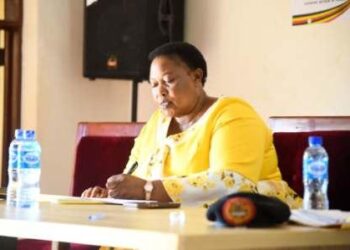
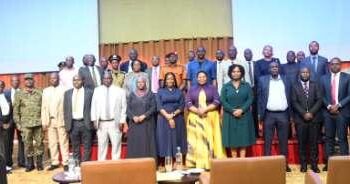
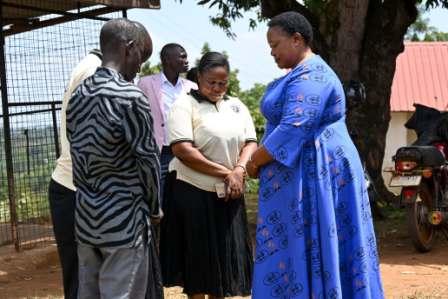
The Minister for the Presidency, Hon. Babirye Milly Babalanda, had come to preside over the closure of the camp retreat organised by the SDA Busoga Field Ministry.

But the news of the death of His Majesty Omukama Oyo Nyimba Kabamba Iguru Rukidi IV, the King of Tooro, who died at the age of 34, hung heavily over the occasion.
Minister Babalanda used her platform to pay tribute to the fallen monarch before turning to the business of the day.
Remembering a King Who Ruled From Childhood
Oyo Nyimba was no ordinary monarch.
He ascended to the Tooro throne in September 1995 at just three years old, following the sudden death of his father, Omukama Patrick David Matthew Kaboyo Olimi III.
That coronation made him, for a time, the youngest reigning monarch on the planet.
He would go on to rule for 31 years, a reign that spanned his own childhood, teenage years and adulthood, all lived under the weight of a crown.
He formally assumed the full duties of kingship at eighteen, in a coronation ceremony at Fort Portal that drew both local and international attention.
Reports close to the Tooro royal family indicate that the King had been receiving treatment abroad in the weeks before his death, with the kingdom initially describing his travel as being for official engagements and further studies.
His passing was confirmed late Thursday night by Tooro Kingdom Prime Minister Calvin Armstrong Rwomiire Akiiki, who described it as a moment of profound sadness for the kingdom.
The Premier also moved quickly to reassure the Batooro that the institution of the Omukama would endure, noting that the late King had left behind a son to carry the lineage forward.
Minister Babalanda’s tribute in Jinja therefore arrived as one of the earliest official reactions from the Government of Uganda.
“I pay tribute to His Majesty Omukama Oyo Nyimba Kabamba Iguru Rukidi IV, the King of Tooro Kingdom, who passed away at such a young age,” she told the congregation.
She did not stop at condolences.
“His Majesty King Oyo will be remembered as a young, visionary and peace-loving King who ascended to the throne at a tender age and steered Tooro Kingdom with dignity, wisdom beyond his age, and a deep commitment to culture, education, youth empowerment, health and environmental conservation,” she said.
Her words drew murmurs of agreement from a congregation that had gathered for worship but now found itself honouring a fallen cultural leader as well.
Greetings From State House
Before addressing matters of governance, Minister Babalanda turned to protocol.
She conveyed warm greetings to the congregation from President Yoweri Kaguta Museveni.
She extended similar greetings from First Lady Maama Janet Kataaha Museveni.
She also passed on words from the Secretary of the Office of the President, Hajji Yunus Kakande, and from the wider staff of the Office of the President.
The gesture underscored the close relationship the NRM Government has cultivated with religious institutions across the country.
Faith, Fellowship and the Government’s Embrace of Religion
Minister Babalanda commended the SDA Church pastors and the leadership of the SDA Busoga Field for organising a full week dedicated to divine prayer, Bible study and fellowship.
She praised the believers themselves for their commitment to attending all seven days of the retreat.
She then framed that devotion within a broader national narrative.
She reiterated that under President Museveni, the government has guaranteed freedom of worship across Uganda.
She stated plainly that the NRM Government recognises religious institutions as vital partners in national development, unity and moral transformation.
That framing has become a familiar refrain at government engagements with faith communities, positioning churches and religious bodies as allies rather than bystanders in the country’s development agenda.
Rallying the Faithful Behind Government Programmes
Having addressed matters of faith, the Minister pivoted to economics.
She urged the congregation to embrace government wealth creation programmes.
She listed the Parish Development Model, commonly known as PDM, among the flagship initiatives.
She also mentioned Emyooga, the Youth Livelihood Programme, Operation Wealth Creation, and the GROW Project.
She stressed that government has invested heavily in these programmes in a bid to defeat poverty at the household level.
Her appeal reflected a pattern seen across many of her recent engagements, in which she uses religious gatherings as venues to popularise government economic interventions among grassroots communities.
The Four-Acre Model: A Blueprint for the Household
Minister Babalanda went further, laying out a specific model for household income generation.
She urged the congregation to adopt what she called the Four-Acre Model.
Under this model, she explained, the first acre should be dedicated to growing coffee.
The second acre, she said, should be set aside for fruit growing.
The third acre, according to her guidance, should be reserved for food crops to guarantee household food security.
The fourth acre, she added, should be used for pasture to support zero-grazing livestock keeping.
She also encouraged backyard projects such as vegetable gardens and poultry keeping for household egg production.
The model, long promoted by government agricultural planners, is meant to help rural households diversify income streams while also securing their own food supply.
No Room for Sleeping: A Call to Fight Corruption and Work Harder
Turning to matters of governance, Minister Babalanda relayed what she described as clear instructions from the President for this term of leadership.
“In this term of leadership, H.E. the President has given us two clear assignments: to fight corruption and to work hard,” she said.
She added an emphatic warning against complacency.
“There must be ‘No Sleeping,'” she said.
The remark drew on a phrase that has increasingly featured in government messaging as officials push for greater accountability and productivity within public institutions and among citizens alike.
A Call to Cleanliness and Closing Prayers
As she wound down her address, the Minister turned to matters of faith once more.
She encouraged the believers to trust in God to bless the work of their hands as they pursued these economic and civic goals.
She then reminded the congregation of an upcoming national exercise.
She rallied them to participate in the National Cleaning Exercise scheduled for Sunday, 30th August.
She noted that this call to action had come directly from President Museveni to the SDA faithful.
With that, the seven-day camp retreat at Ivunamba SDA Church Zone drew to a close, its final hours marked not only by scripture and song but by tribute to a young king whose sudden death reminded the congregation, and the nation, of life’s fragility.