











Uganda’s streets were supposed to fall silent under the sound of sweeping brooms on Saturday.
That was the date Cabinet had fixed for the country’s now-familiar National Cleaning Day.
But for members of the Seventh-day Adventist Church, Saturday is not just another date on the calendar.

It is the Sabbath, their sacred day of worship, and one they observe strictly.
So while the rest of Uganda swept streets and cleared drains on Saturday, 29th August, the SDA fellowship stayed at prayer instead.
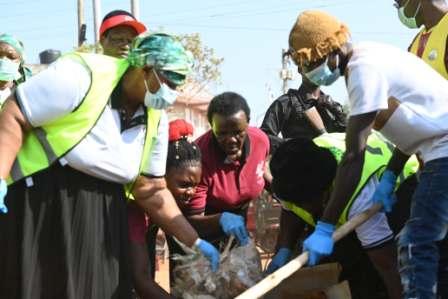
A day later, in Iganga Municipality, they picked up their brooms.
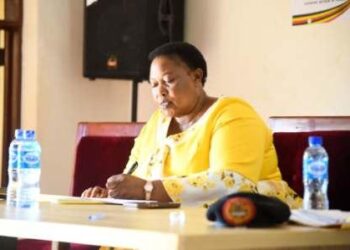
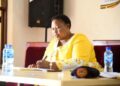
Leading them was the Minister for the Presidency, MP for Budiope West Constituency and Director for SDA Busoga Women Field, Hon. Babirye Milly Babalanda.
A Presidential Compromise for a Religious Community
The Sunday exercise did not happen by accident.
It followed direct guidance from President Yoweri Kaguta Museveni himself.
Understanding the SDA Church’s religious obligations, the President guided that its faithful should always observe their National Cleaning Day on the last Sunday of the month instead.
For Iganga’s Adventists, that meant today, Sunday, 30th August, became their appointed clean-up day.
The accommodation reflected a broader national policy that has, since July 2026, turned monthly community clean-ups into a mandatory exercise across the country.
Cabinet approved the National Cleaning Day initiative in August 2025 after officials cited alarming statistics linking poor sanitation to disease.
Government figures presented at the time indicated that roughly three-quarters of the diseases reported in Uganda are linked to poor sanitation and hygiene, including malaria, diarrhoea and typhoid.
Under the national framework, the exercise is meant to run for a fixed window on the last Saturday of every month, with all Ugandans expected to clean roads, drainage channels, markets, schools, health facilities and places of worship.
For the SDA community, however, the President’s guidance meant that obligation shifted, without being abandoned, to the following day.
Grief Amid the Grime: Condolences for a Fallen King
Before the brooms came out in full force, Minister Babalanda paused to address a different matter weighing on the nation.
In her remarks after the cleaning exercise, she conveyed warm greetings from the Office of the President.
She then extended heartfelt condolences to President Museveni, First Lady Maama Janet Kataha Museveni, and the Kingdom of Tooro.
Her sympathies followed the death of His Majesty Omukama Oyo Nyimba Kabamba Iguru Rukidi IV.
She informed the gathering that, per the President’s directive, the late King would be accorded an official burial.
She added that flags across the country would fly at half-mast for three days in his honour.
She explained that the National Organising Committee is working closely with the Ministry of Gender, Labour and Social Development, the Kingdom of Tooro, the Royal Family, and ministers from Tooro to implement the directive.
She said burial arrangements would be communicated in due course.
The moment illustrated how deeply the King’s death has rippled through government engagements far beyond Tooro’s own borders, reaching even a municipal clean-up exercise more than a hundred kilometres away in Busoga.
Freedom of Worship as a Governing Principle
Returning to the matter at hand, Minister Babalanda framed the Sunday arrangement as more than a scheduling favour.
She has been at the forefront of implementing the President’s guidance to the SDA Church on this issue.
She said the arrangement demonstrates the NRM government’s respect for freedom of worship.
She described that freedom as one that was restored and is protected under President Museveni’s leadership.
The remark echoed language she has used repeatedly at similar SDA gatherings, positioning the government as a guarantor of religious liberty rather than a bystander to it.
Cleanliness as a Public Health Weapon
Turning to the cleaning campaign itself, the Minister thanked President Museveni and Cabinet for passing the National Cleaning Day initiative.
She noted that cleanliness is directly linked to good health, community transformation and national development.
Her framing mirrored the government’s own public health messaging on the programme.
Health officials have previously described the monthly exercise as one of the country’s most important preventive public health interventions, arguing that clean drainage channels and proper waste disposal reduce disease outbreaks and lower healthcare costs.
Minister Babalanda commended the leadership and residents of Iganga for embracing the exercise with enthusiasm and unity.
She urged all Ugandans to make cleaning a routine responsibility.
She said a clean environment is the first step in the fight against poverty and disease.
Two Assignments and a Warning to Land Grabbers
The Minister then shifted from sanitation to governance.
She reiterated President Museveni’s two key assignments for this term of leadership.
Those assignments, she said, are eradicating poverty and fighting corruption.
On the strength of that mandate, she issued a direct order to local authorities.
She directed the Resident District Commissioner of Iganga District to work together with the State House Anti-Corruption Unit and other law enforcement agencies.
Their joint task, she said, is to arrest all land grabbers operating in the district.
The instruction placed land protection squarely alongside sanitation and health as part of the day’s agenda, underscoring how Minister Babalanda has increasingly used community gatherings to issue direct governance directives.
Gratitude From the Pulpit
The Bishop of SDA Busoga Field, Pastor Jimmy Kajura, also addressed the gathering.
He expressed gratitude to President Museveni and the NRM Government.
He thanked them specifically for answering the SDA faithful’s call to permit their cleaning exercise on the last Sunday of the month rather than on Saturday.
Saturday, he noted, remains their day of worship.
His remarks captured the sense of accommodation that ran through the entire event, a rare instance of national policy bending, without breaking, to fit a religious community’s convictions.
Many Hands Behind the Brooms
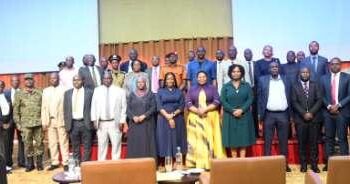
The cleaning exercise was far from a one-woman effort.
It brought together staff from the Uganda AIDS Commission.
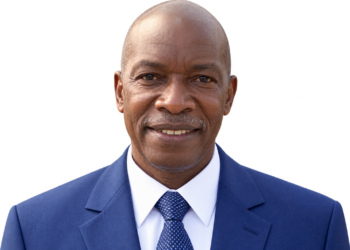
It drew in the NRM Chairperson for Iganga District, Hajji Walubi Abubaker.
It included the Chairperson of Iganga District’s LC V, Swabiru Isabirye Kalulu.
It also brought in the Chairperson of Kaliro District’s LC V, Kagoda Elijjah.
Community leaders and ordinary residents of Iganga Municipality rounded out the effort.
Together, they swept streets, collected garbage and opened drainage channels across the municipality.
By the time the brooms were set down, Iganga’s streets looked markedly different from the morning before, a small but visible marker of a national campaign that continues to reshape how Ugandans spend their weekend mornings, whether on a Saturday or, for the SDA faithful, on the Sunday that follows.