
















For years, the big names have dominated talk about African economic power.
Nigeria, South Africa and Egypt are the economies people usually mean when they speak of the continent’s weight.
The International Monetary Fund’s October 2026 World Economic Outlook tells a different story about speed.
It projects South Sudan to lead Africa with real GDP growth of 10.5%.
Ethiopia follows at 9.2%, and Rwanda at 7.4%.
Among the 18 fast-growing economies in the IMF ranking, the three occupy third, fourth and eighth place respectively.
Eight African countries appear on that list, a sign of the continent’s growth potential despite persistent financial and political challenges.
The same report puts global growth at 3.1%, a figure revised up by 0.1 percentage points from July.
The region behind the headline
The three leaders are not rising in isolation.
The IMF has raised its 2026 forecast for sub-Saharan Africa to 4.5%, marginally higher than July’s 4.3%.
The Fund also cautions that the regional number “masks substantial divergence” between countries.
Oil importers are the most exposed, as higher energy and food prices linked to the Iran war’s supply chain shocks bite harder.
Zeine Zeidane, Director of the IMF’s African Department, said at the Bangkok briefing that the upgrade reflects the region’s resilience.
He credited earlier reforms, including subsidy and exchange rate changes in Ethiopia and Nigeria, as well as structural reforms in South Africa.
He also warned that bilateral aid to the region is set to fall by another 12% in 2026.
For 2026 and 2027, the IMF expects the region to average 4.5% growth, well above the global average of 3.1%.
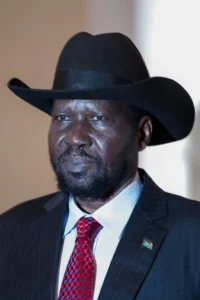 South Sudan: a comeback built on a single resource
South Sudan’s place at the top is, above all, a story of recovery.
Oil accounts for about 95% of the country’s exports.
It also supplies between 70% and 80% of government revenue.
That dependence became painful when fighting in neighbouring Sudan disrupted the pipeline carrying South Sudanese crude to international markets.
According to the African Development Bank, GDP contracted by 27.6% in the 2023/24 financial year as oil production and exports collapsed.
With shipments now recovering, the IMF expects output to rebound sharply.
That should restore some government revenue and foreign exchange earnings.
The World Bank sees the same pattern and expects “a substantial recovery in 2026 following five years of contraction,” driven by the resumption of oil exports.
The caution is that much of this growth is a recovery from earlier losses, not expansion across several industries.
A country this dependent on crude remains vulnerable to renewed conflict, damage to export infrastructure and swings in global petroleum prices.
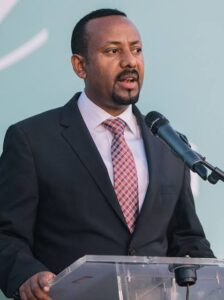
Ethiopia: reform pays off, but the pressure remains
Ethiopia’s rise follows a different route.
It is supported by economic reforms, stronger exports, infrastructure development and growing private-sector activity.
In July 2024, the government allowed the birr to trade more freely.
It also introduced monetary policy reforms and secured IMF support to ease foreign exchange shortages and restore stability.
Those steps have improved access to foreign currency.
Coffee and gold exports have strengthened the country’s foreign exchange earnings.
Ethiopia has also opened sectors such as banking and trade to greater foreign investment.
Yet inflation, external debt obligations and higher import costs continue to threaten household purchasing power and economic stability.
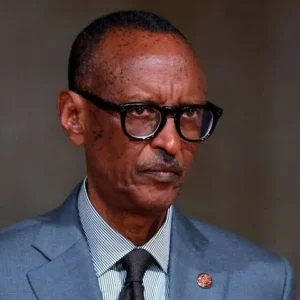
Rwanda: building a regional business hub
Rwanda’s expansion rests on construction, services, tourism and infrastructure investment.
The country is steadily strengthening its position as a regional business destination.
According to the IMF, its economy grew by 9.7% in the first half of 2026.
Stronger exports and remittance inflows helped narrow its external financing gap.
The picture has a hard edge, however.
Inflation reached 15.7% in August, reflecting domestic price pressures and higher international energy and fertiliser costs.
Rwanda is also pursuing an IMF-supported financing programme to strengthen economic stability.
How the fast movers measure up against the giants
The gap with Africa’s largest economies is striking.
The IMF projects Nigeria to grow by 4.2% in 2026, Egypt by 5.1% and South Africa by 1.0%.
South Sudan’s projected growth is therefore more than twice Nigeria’s rate.
It is also over ten times South Africa’s.
Beyond Africa, the comparison is just as sharp.
China is projected at 4.5%, the United States at 2.3% and the United Kingdom at 1.3%.
Guyana leads the global ranking at 22.3%, driven largely by offshore oil production.
Taiwan follows at 10.7%, Vietnam at 8.4% and India at 7.0%.
Other African countries among the 18 include Guinea at 7.2%, Benin, Niger and Sudan at 7.0% each, and Uganda at 6.2%.
Fast is not the same as big
A high growth rate does not make a country rich.
South Sudan, Ethiopia and Rwanda have far smaller economies than Nigeria, South Africa, China and the United States.
Growing quickly from a low base is easier than adding output to an economy that is already enormous.
Debt adds another strain across the continent.
One recent analysis says African countries must repay creditors nearly $95 billion in 2026.
Last week, the World Bank said that nearly four-fifths of African countries spend more on interest payments than on health or education.
What happens after the headlines
For these three countries, the hard work starts once the forecasts are published.
Sustaining momentum will depend on attracting investment and creating jobs.
It will also require diversifying production beyond oil, coffee and a handful of other strengths.
Above all, it will mean improving household incomes, so that a number in an IMF table becomes a better life for ordinary families.