













Half a world away from Kampala, a Ugandan government minister stood before an audience that had never really left home.
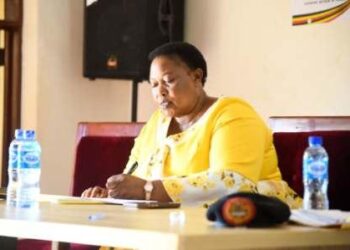
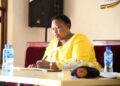
The Minister for the Presidency, Hon. Babirye Milly Babalanda, was in Melbourne, Australia, on Saturday, October 17, 2026.
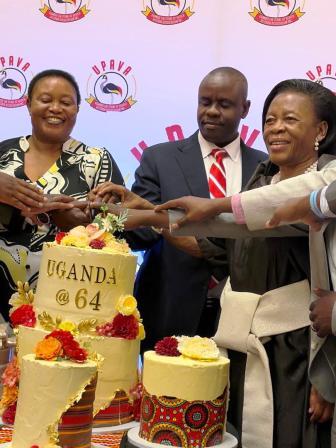
She was addressing the UG@64 Australasian Independence Gala, Business and Cultural Convention.

The three-day gathering was part of Uganda’s 64th Independence Anniversary celebrations.
Its theme was “Embracing Our Sovereignty with Hope and Visionary Leadership.”
Her message to Ugandans in Australia and across the Australasian region was simple.
Invest more in Uganda.
Speak well of Uganda.
Bring your skills and resources home, whether you do it from a distance or in person.
She opened by conveying greetings from H.E. the President of the Republic of Uganda, Gen. (Rtd.) Yoweri Kaguta Museveni.
She also carried greetings from the First Lady and Minister of Education and Sports, Maama Janet Kataaha Museveni.
These went to the organisers, the participants and the other stakeholders in the hall.
A reunion with a purpose
Babalanda described the convention as more than a social occasion.
In her view, it was a platform for strengthening ties among Ugandans and friends of Uganda.
Those ties, she said, are built through business partnerships, cultural exchange, knowledge sharing and investment.
She thanked the participants for the emotional loyalty they have kept alive across the distance.
“I thank you for keeping Uganda close to your hearts despite the geographical distance. You may live in Australia, but Uganda remains part of your identity, heritage and future,” Babalanda said.
She also commended the organisers for the guest list.
It brought together Ugandans and friends of Uganda from Australia, New Zealand, South Africa, Uganda and beyond.
For her, such a gathering is a chance to turn shared interests into practical initiatives that support national development.
The Australian link is a meaningful one.
The 2021 Australian Census counted 4,613 people in Australia who were born in Uganda.
That is a small community, but it is a connected one, and it has found its voice in events like this.
Building Uganda is not only a job for those at home
The Minister’s central argument was that nation-building does not stop at the border.
She urged diaspora communities to see themselves as strategic partners in the country’s economic transformation.
She acknowledged what they already give.
Remittances, professional expertise, entrepreneurship, knowledge transfer and international networks all flow home.
Together, she said, these support families, strengthen communities and create opportunities.
On behalf of the Government and people of Uganda, she thanked them.
Then she asked for more.
She encouraged Ugandans abroad to go beyond financial support.
She wants them to establish business partnerships and facilitate technology transfer.
She also wants them to connect Ugandan entrepreneurs to international markets.
The numbers behind the appeal
The appeal rests on figures the Bank of Uganda has recently put in the public domain.
Under a new data collection framework, remittance inflows to Uganda reached $2.5 billion in 2025, equivalent to approximately 3.8 per cent of GDP.
The central bank’s new system has also changed how Uganda sees its own diaspora money.
According to the Bank’s Deputy Governor, Augustus Nuwagaba, the tracking tool captured an additional US$1 billion compared with earlier estimates of around $1.5 billion.
Most of this money moves on phones rather than across bank counters.
About 73 percent of inflows are now received digitally.
More than 92 percent of transactions are below $500.
In other words, the typical remittance is a modest, regular payment that keeps a household running.
About 1.66 million Ugandans received money from relatives and friends abroad in 2025.
Uganda also remains a net recipient.
Outbound remittances were about $402 million in 2025.
That is the context for the Minister’s request that the diaspora move from supporting households to building enterprises.
“Invest in Uganda yourselves”
Babalanda was direct about where she thinks the diaspora’s advantage lies.
Ugandans abroad, she said, understand the country in a way that outside investors often do not.
“Do not only encourage foreigners to invest in Uganda; invest in Uganda yourselves. You understand our country, its people, culture and opportunities,” she urged.
She noted that Ugandans living abroad have valuable international experience.
They also have access to capital and professional networks.
Together, she said, these can help unlock Uganda’s economic potential, create jobs and stimulate entrepreneurship.
Telling Uganda’s story, honestly
Babalanda also asked the diaspora to act as ambassadors.
She wants them to showcase Uganda’s tourism destinations, cultural heritage, investment opportunities and hospitality.
She pointed out that foreign perceptions of any country are often shaped by television reports, social media and other news platforms.
Those platforms, she observed, may give greater prominence to negative incidents than to positive developments.
She drew on a familiar rule of journalism, that unusual events attract more attention than ordinary ones.
The Minister cautioned against letting isolated incidents define Uganda’s overall image.
But she was careful to add that promoting the country does not mean hiding its problems.
Nor does it mean discouraging constructive criticism.
“Patriotism does not mean hiding our weaknesses. It means acknowledging challenges, contributing to solutions and ensuring that our country’s strengths and potential are not overlooked,” she said.
She highlighted Uganda’s natural beauty, cultural diversity, fertile soils, natural resources and entrepreneurial potential.
She recalled that former British Prime Minister Winston Churchill famously described Uganda as the “Pearl of Africa.”
The phrase has a documented origin.
Churchill toured East Africa in 1907 as Britain’s Under-Secretary of State for the Colonies.
He later wrote a travelogue about the trip, in which he waxed most eloquent on Uganda, calling it a pearl.
The book, My African Journey, was published in 1908.
Some historians note that Churchill may not have been the first to use the title, but he is the one given most credit for putting Uganda on the world map.
For a diaspora audience, the lesson in the story is practical.
Uganda’s global reputation has long been shaped by what outsiders write and say.
The Minister is asking Ugandans abroad to help write the next chapter themselves.
She also encouraged them to give prospective investors reliable information.
She wants them to connect investors to credible local partners and help identify genuine business opportunities.
The development agenda behind the invitation
Babalanda said Uganda was entering an important phase of economic transformation.
It is guided by the Fourth National Development Plan (NDP IV) and Vision 2040.
She highlighted the Tenfold Growth Strategy, which seeks to expand Uganda’s economy towards US$500 billion.
The strategy is not new, but it is ambitious.
Treasury officials have described it as growing the economy from about $50 billion to $500 billion by 2040.
NDP IV, for its part, is the fourth of six National Development Plans meant to deliver Vision 2040.
Money is the obvious hurdle.
Speaking at a recent policy dialogue on development financing, Babalanda herself said the government cannot finance Uganda’s transformation through the national budget alone.
NDP IV’s five-year implementation is estimated to require Shs593.6 trillion, with about 30.4 per cent expected from the private sector.
That is where diaspora capital, knowledge and networks come in.
At the Melbourne convention, she identified agriculture, tourism, minerals, oil and gas, manufacturing, science and technology as key sectors offering opportunities for investment, enterprise and job creation.
Some of these sectors already show momentum.
For example, Uganda’s coffee industry recently crossed the $1 billion export mark, with ambitions to double earnings through increased production and value addition.
Analysts also remind readers that the target is a stretch.
One recent assessment says that success will depend less on the ambition of the target and more on the quality of execution.
Coming home, or helping from afar
The Minister urged Ugandans in the diaspora to establish businesses at home.
She asked them to share their professional expertise and mentor emerging entrepreneurs.
She also asked them to develop cross-border partnerships that connect Uganda to global markets.
She did not limit the invitation to those who stay abroad.
She welcomed those considering returning to Uganda.
They might return to establish businesses, raise families, share their professional knowledge or retire.
Their experience and resources, she emphasised, could contribute significantly to the country’s development.
Young people at the centre
According to Babalanda, diaspora engagement should particularly prioritise young people.
She wants them connected to internships, scholarships, mentorship, technology, entrepreneurship and professional opportunities.
Such initiatives, she said, would help translate the gains of political independence into economic independence.
That translation would happen through wealth creation, productive employment and improved household livelihoods.
The Minister added that Uganda’s economic transformation agenda was consistent with the long-standing vision of H.E. President Yoweri Kaguta Museveni.
Keeping the culture alive
Beyond money and markets, Babalanda spoke about identity.
She underscored the importance of preserving Uganda’s cultural identity among diaspora communities and future generations.
She commended Ugandans in Australia and the wider Australasian region for showcasing their heritage.
They do it through music, languages, food, traditional values and cultural practices.
She urged parents in the diaspora to encourage their children to understand and appreciate their Ugandan roots.
At the same time, she said, those children should embrace the opportunities and responsibilities of the societies in which they live.
She also called for cultural exchange initiatives.
These, she said, would strengthen Uganda–Australia relations.
They would also foster closer ties with New Zealand, South Africa and other countries represented at the convention.
Three commitments to carry home
Babalanda said the convention should provide a foundation for lasting cooperation.
She named business, tourism, innovation, cultural exchange and investment as the areas of focus.
Diaspora networks, she said, should play a central role in linking Uganda to international opportunities.
In her concluding remarks, she challenged participants to leave with three commitments.
The first is to promote Uganda positively and truthfully.
The second is to establish partnerships that attract investment and knowledge.
The third is to make personal contributions to national development.
“Uganda belongs to all of us. Its future is a shared responsibility, and its opportunities should inspire us to work together regardless of where we live,” she said.
She expressed hope that the UG@64 celebrations would renew patriotism and deepen international partnerships.
She also hoped they would inspire practical action towards building a more prosperous Uganda.
She wished Ugandans a happy 64th Independence Anniversary.
She reaffirmed the importance of strengthening Uganda–Australia relations for mutual benefit.
Honouring achievement, gathering leaders
The convention also featured the UPAVA Awards.
They recognised the achievements and contributions of Ugandans in Australia and the wider Australasian region.
The categories covered leadership, enterprise, community service and cultural preservation.
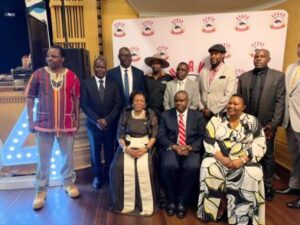
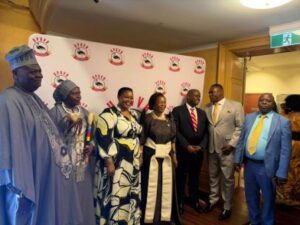
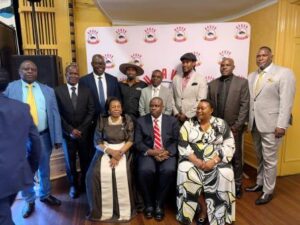
The celebrations were graced by a long list of dignitaries.
They included the Minister of Local Government, Hon. Balaam Barugahara.
His Highness Papa Paul Sande Emolot, the traditional leader of Teso, attended, accompanied by Her Majesty Juliet Among Emolot.
Princess Katrina Sarah Ssangalyambogo delivered a message on behalf of the Nnabagereka of Buganda.
Her Excellency Dorothy Samali Hyuha, Uganda’s High Commissioner to Australia, was present.
So was the Mayor of Yarra.
Representatives of the National Identification and Registration Authority (NIRA) and the Directorate of Citizenship and Immigration Control also attended, among other dignitaries.