


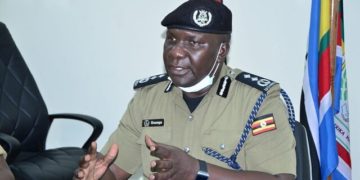







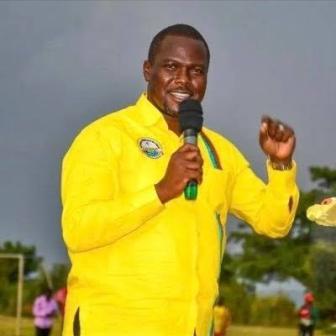
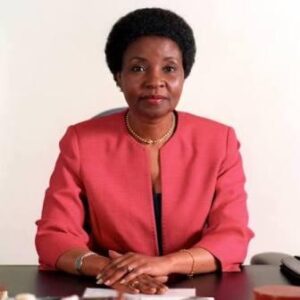
Hon Richard Todwong has been elected as one of the eminent persons on the Executive Committee of the Council of African Political Parties (CAPP).
The council brings together all of Africa’s ruling parties, along with the major opposition parties in their respective countries.

Todwong is the Secretary General of Uganda’s National Resistance Movement (NRM).
He will serve as a Vice Chairperson representing East African political parties.
He will share that responsibility with Dr Asha Rose Migiro, the Secretary General of Tanzania’s Chama Cha Mapinduzi (CCM).
Between them, the two will carry the voice of East Africa’s parties into the council’s top leadership.
What Is CAPP, and Why Does It Matter?
CAPP is not a household name, but it occupies a unique space in African politics.
It was established in Khartoum in 2013 to enhance political cooperation and unity between African countries.
It was set up as an umbrella body for the two major political parties in democratic African countries, with its permanent secretariat in Khartoum.
The council’s leadership is spread across the continent’s regions.
At its 2017 General Assembly, for example, the council chose five Vice Chairpersons, four of whom also chair the East, North, Central and Southern Africa sub-regions.
That regional design explains why East Africa’s representation, now held by Uganda and Tanzania’s ruling parties, carries real weight.
Delegates at that 2017 meeting were meeting in the shadow of political instability and civil wars on the continent, according to the then CAPP president.
The council’s purpose is to give parties a regular forum for dialogue, even when they sit on opposite sides of the political divide at home.
A Proud Moment for Uganda and the Region
News of Todwong’s election was received with pride in party circles.
In a statement on the achievement, the sentiment was captured this way:
“This is a proud moment for Uganda, for the NRM, and for East Africa. It is a recognition of Hon Todwong’s visionary leadership, commitment to Pan-Africanism, and dedication to strengthening political parties across the continent.”
The words frame the election as more than a personal honour.
They present it as recognition of Uganda’s standing in continental politics.
The Man Behind the Title
Todwong’s international exposure did not begin with this election.
The NRM’s own profile of its Secretary General notes that he is an alumnus of Peking University in Beijing, China.
The same profile says he completed an executive programme in the United States for young leaders selected from around the world.
As Secretary General, he runs the party’s day-to-day machinery.
That includes receiving petitions from districts and presenting them to the party’s Central Executive Committee.
His new continental role extends that organisational work beyond Uganda’s borders.
Addis Ababa: Talks on the Summit’s Sidelines
Todwong’s election came at the 2nd African Political Parties Summit in Addis Ababa, Ethiopia.
While there, he held a bilateral meeting with Hon Munyaradzi Machacha, the Political Commissar of Zimbabwe’s ZANU-PF.
Their conversation centred on strengthening relations between the NRM and ZANU-PF.
They placed particular emphasis on party building and organisational development.
They also discussed institutional cooperation.
They agreed on the value of exchanging experiences between the two parties.
Shared Heritage, Shared Purpose
The two leaders also reflected on a history their parties hold in common.
Both the NRM and ZANU-PF trace their roots to liberation struggles.
The discussion highlighted that shared liberation heritage.
It also underlined the importance of sustained engagement between parties in advancing the aspirations of their respective peoples.
The meeting reaffirmed their commitment to strengthening fraternal relations and deepening political cooperation.
Both sides also pledged to promote the principles of Pan-African solidarity, sovereignty and economic self-determination.
Looking Ahead
Todwong now carries two responsibilities. At home, he continues to run the NRM’s secretariat.
Across the continent, he helps steer a council that links governing and opposition parties.
How he uses the East African vice-chair seat will be the real test of what this election means.