














This Saturday, the sound of Uganda’s roads will change.
Between 7:00 a.m. and 10:00 a.m. on July 25, engines will fall quiet, and brooms will take over instead.
The Uganda Police Force has issued a nationwide reminder that the country’s first-ever National Cleaning Day is here, and that the rules of the road will not apply as usual.

For three hours, cars, motorcycles, bicycles, and even boats on the water will be barred from moving, with only emergencies allowed through.
Police say the exercise is part of government’s wider push to build a cleaner, healthier Uganda, one that prevents sanitation-related disease before it starts rather than treating it afterward.
That push has already been laid out publicly by the country’s top officials.
Prime Minister Robinah Nabbanja, announcing the initiative at the Office of the Prime Minister, was direct about how the morning should unfold.
“The National Cleaning Day initiative will run from 7:00 am to 10:00 am on the last Saturday of every month,” she said.
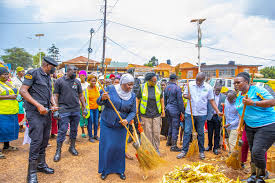
“During this period, all Ugandans are expected to participate in organized cleaning activities within their communities, including roads, health facilities, drainage systems, markets, places of worship, schools, and other public places,” Nabbanja added.
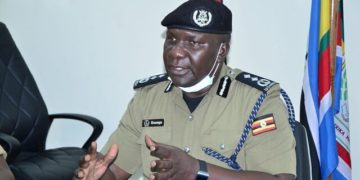
Police are now the ones tasked with making sure that order holds on the ground.
They have called on every motorist, trader, institution, and local leader to fall in line, not as spectators but as active participants in cleaning their own neighbourhoods.
Roads, markets, drainage channels, and public spaces are all expected to get attention during the window.
Not everyone is affected equally, however.
Ambulances and medical staff will keep moving.
So will people travelling for pre-scheduled medical treatment, provided they carry proof of their appointment.
Security vehicles on official duty are also exempt, as is cross-border traffic passing through Uganda’s major transport corridors.
Everyone else has been told to simply stay put, join in, and only resume normal movement once the three hours are over.
Government officials elsewhere have framed the exercise as more than a one-off clean-up.
Joyce Nabbosa Ssebugwawo, Minister of State for ICT and National Guidance, has said the goal is cultural as much as practical.
“Keeping our environment clean is a civic duty for every Ugandan,” she said, adding that the ambition is to build habits that outlast any single Saturday.
Police, for their part, are asking for patience rather than resistance.
Officers deployed to enforce the restriction have been told to work with local leaders rather than against communities, and residents needing clarity mid-exercise have been advised to simply approach the nearest officer on duty.
Whether Ugandans embrace the pause or merely tolerate it, the country’s roads are set to fall silent for three hours this Saturday, and for one Saturday every month after that.