














For years, Busoga’s fortunes were tied almost entirely to sugarcane.
Farmers in Mayuge, Bugiri, and Namayingo watched cane prices swing while poverty in the sub-region remained stubbornly high.
Government agronomists and district leaders began asking whether a different crop could change that story.

Oil palm, already transforming smallholder incomes on the islands of Kalangala, became the answer they settled on.
From a Grassroots Association to a Registered Cooperative
The Mayuge District LC5 Chairperson recently walked residents through how that answer took root.
An organization to mobilize farmers around oil palm was first founded in 2013.
Its early task was sensitization, encouraging landowners across Mayuge to consider the crop as part of their farming mix.
That mobilization bore fruit the following year.
The Mayuge Oil Palm Outgrowers Association was formed and formally registered with the local government on 14 July 2014.
It operated under that structure until September 2023.
At that point, guidance from the National Oil Palm Project (NOPP) management, led by Madam Susan Lakoniro, pushed the arrangement toward something more formal.
With backing from the Ministry of Trade, Industry and Cooperatives, the outgrowers regrouped as the Mayuge District Oil Palm Cooperative Society Limited.
The Registrar of Cooperatives certified the new society on 29 September 2023.
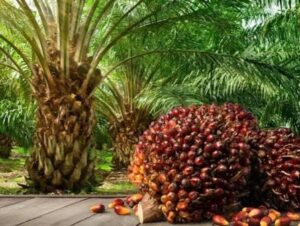
The Project Widens Into a Three-District Hub
The chairperson was careful to note that the initiative no longer belongs to Mayuge alone.
Bugweri and Namayingo have been folded in, forming what officials now call the Mayuge Hub.
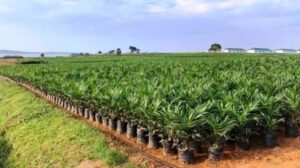
Independent reporting confirms the scale of that ambition: the government’s objective is to establish an estate of 3,500 acres of palm oil trees across the hub, spanning Mayuge, Bugiri, and Namayingo, to support oil production nationally.
Roads are already being cut from the project into individual farms, a practical step the chairperson flagged as evidence of momentum.
He argued that because the hub spans three districts, all three deserve a share of the Corporate Social Responsibility commitments tied to the project.
Commercial bank loans form another pillar of the plan, with NOPP expected to help farmers navigate access to credit.
Weighing Food Security Against Cash-Crop Ambition
Population pressure shaped how the chairperson wants the benefits distributed.
Mayuge, he explained, is more densely populated than either Bugweri or Namayingo, which means it should lean toward smallholder participation rather than large commercial farming, to avoid crowding out food production.
Under the proposed allocation, Mayuge is set to receive 1,500 smallholder farmers, Bugweri 1,000, and Namayingo 1,000 — a combined 3,500 farmers, before commercial growers are even counted.
He committed to working closely with the oil palm project manager and to sharing the resulting report with every LC5 chairperson across Busoga.
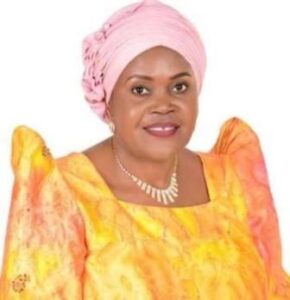
The Third Deputy Prime Minister’s Long Walk With Busoga’s Farmers
Behind the technical rollout sits a longer political story, and much of it runs through Uganda’s Third Deputy Prime Minister, Rt. Hon. Lukia Isanga Nakadama.
Nakadama has represented Mayuge District as Woman Member of Parliament continuously since 2001, giving her one of the longest-running political relationships with the district’s farmers of any national leader.
She is credited as the driving force behind the Busoga Consortium, a platform she has used to build unity among the sub-region’s leaders and to mobilize communities around government programmes.
That mobilization record extends well beyond palm oil.
She has repeatedly used district events, including farmer gatherings on cocoa growing in Mayuge, to press residents toward diversifying away from sugarcane dependency and into higher-value crops.
She has also led engagements introducing improved livestock breeding technologies and modern farming practices across Busoga, aimed at lifting household incomes.
Local leaders working on the oil palm hub describe that sustained, decade-spanning advocacy — for crop diversification, farmer training, and access to credit — as part of what kept the oil palm push alive through years of delay before planting finally began.
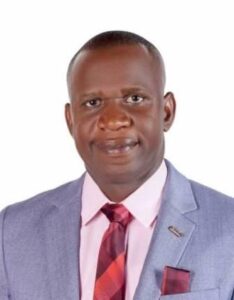
A New Chairman Inherits a Growing Project
Leadership at the district level has also shifted.
Ziija David won the NRM flag for Mayuge District LC5 Chairperson in mid-2025, defeating his closest rival by a wide margin, and was sworn into office on 18 May 2026 after Mayuge’s first-ever formal leadership handover ceremony.
He now inherits a cooperative structure, a growing farmer base, and a hub arrangement spanning three districts, built over more than a decade of sensitization, registration, and renegotiation.
His task, as laid out in his recent remarks, is less about starting the project and more about steering its next phase: opening roads to farms, securing Corporate Social Responsibility commitments for all three hub districts, and keeping Mayuge’s smallholder-heavy approach intact as the cooperative scales.
What Farmers on the Ground Are Saying
Farmers who have already begun planting describe a project they waited years to see materialize.
Moses Mabanda, chairperson of the Mayuge Outgrowers Association, pointed to the transformation oil palm has brought to Kalangala as the model the community hopes to replicate.
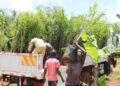
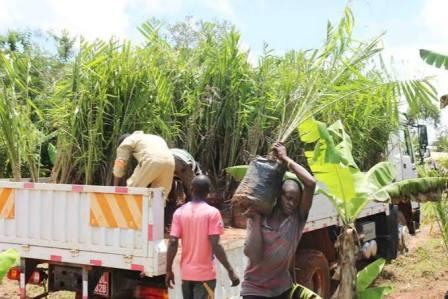
NOPP’s own project manager, Suzan Lakwonero, has said the seedlings now reaching farmers were nurtured in project beds for two years before distribution, with trained extension workers assigned to support the Mayuge hub.
Officials elsewhere in government have echoed that optimism in blunter terms.
Justine Kasule Lumumba, Minister for General Duties in the Office of the Prime Minister, has called oil palm “a game changer” for Mayuge, pointing to Kalangala as proof.
The Road Ahead
The numbers officials are now working toward — 3,500 farmers across three districts, thousands of acres under cultivation, and a cooperative built to outlast any single term in office — represent the payoff of a process that began with a handful of mobilizers in 2013.
Whether the hub delivers on that promise will depend on the roads still to be finished, the loans still to be disbursed, and the balance district leaders strike between smallholders and commercial growers.
For now, both the long-serving Deputy Prime Minister and Mayuge’s newly sworn-in chairman find themselves custodians of the same unfinished project — one inherited, one built.