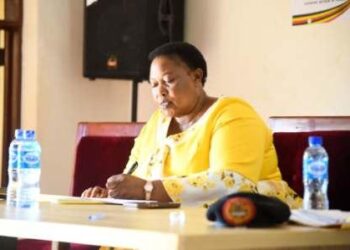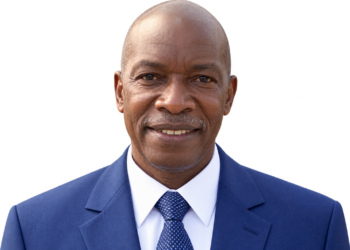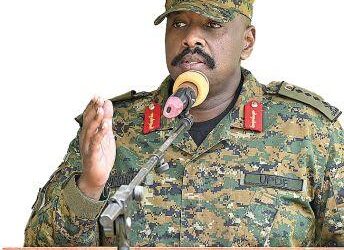


















Minister for the Presidency, Hon. Milly Babirye Babalanda, on Wednesday held closed-door consultations with Vice President Maj. (Rtd) Jessica Alupo at the Vice President’s office in Kampala.
The meeting, which also brought together Permanent Secretary in the Office of the President, Hajji Yunus Kakande, centered on how government can tighten coordination and speed up the delivery of services to ordinary Ugandans.
It comes at a time when both leaders are settling into their second consecutive terms in the 2026–2031 administration, having been reappointed by President Yoweri Kaguta Museveni following the formation of the new Cabinet in June.

Babalanda later took to her official X account to detail the substance of the engagement, describing it as a strategic sit-down aimed at strengthening the machinery that drives the President’s programmes across the country.
“The meeting focused on the work of the Presidency and efforts to streamline service delivery across government,” she wrote, adding that the discussions dwelt on strengthening coordination between the Office of the President and other government entities.
Keeping Presidential Directives on Track
According to the minister, a central theme of the talks was ensuring that presidential directives, wealth creation programmes, and service delivery initiatives are effectively implemented at all levels of government.
This is not a new concern for Babalanda, whose docket places her at the center of supervising Resident District Commissioners and monitoring how far government programmes reach the last mile of the population.
She has, since taking over the Ministry of the Presidency in 2021, built a reputation for pushing RDCs and their deputies to act as what she often calls the eyes and ears of the President in every district.
The Wednesday meeting, she indicated, was partly designed to reinforce that chain of accountability, from State House down to the village level, so that government programmes do not stall in bureaucratic bottlenecks.
Monitoring and follow-up featured prominently in the discussions, alongside efforts to improve communication and feedback mechanisms linking the presidency, local leaders, and citizens.
“Monitoring, follow-up, improving communication and feedback mechanisms between the presidency, local leaders, citizens and enhancing efficiency in the execution of the mandate of the Office of the President,” Babalanda said, outlining the scope of what was tabled.
She framed all of it as being in support of President Museveni’s drive to deliver on the NRM manifesto, the ruling party’s blueprint for the current five-year term.
A United Front Between Two Offices
Beyond the technical talk of monitoring frameworks and feedback loops, the meeting also carried a symbolic weight, bringing together the two arms of government most directly answerable to the Presidency.
Babalanda used the opportunity to publicly reaffirm her ministry’s commitment to working hand in hand with the Office of the Vice President, a relationship that, on paper, sits at the very apex of Uganda’s executive coordination structure.
“We reaffirmed our commitment to work closely with the Office of the Vice President to ensure unity of purpose, accountability, and timely delivery of services to Ugandans,” she said.
That message of unity is one she has repeated often since her reappointment, when she thanked President Museveni for renewing her mandate and pledged to execute her duties with loyalty, accountability, and a focus on tangible results.
Vice President Alupo, for her part, has in recent weeks used her own platform to highlight a similar service-delivery agenda, presiding over cleaning day launches, graduation ceremonies, and engagements meant to keep citizens connected to government programmes.
Her office, established under Article 108 of the Constitution, exists to support the President directly and to step in on assigned duties, making it a natural partner for the kind of coordination Babalanda’s ministry is pushing.
A Ministry Built on Coordination
The Ministry of the Presidency itself was created to help the President manage the sprawling machinery of Uganda’s executive branch, from policy coordination to oversight of programmes rolled out through the Office of the President.
Babalanda’s continued stewardship of that docket, now into a second term, has been described by political observers as a reward for consistency, with her becoming the first minister to serve more than one term in that specific portfolio.
Her critics in the past questioned whether her rural background and educational journey, which included completing a degree at Bugema University in her 50s, prepared her for such a demanding office.
She has, however, weathered that scrutiny and retained the President’s confidence, a fact reflected in her continued presence at the center of major government coordination efforts such as Wednesday’s meeting.
For Kakande, whose role as Permanent Secretary makes him the administrative backbone of the Office of the President, the meeting offered a chance to align the technical execution of programmes with the political direction being set by both the ministry and the Vice President’s office.
Officials familiar with the workings of the Office of the President note that such inter-office consultations typically feed into broader efforts to track how government wealth creation schemes, including the Parish Development Model and related initiatives, are performing at community level.
Looking Ahead
No firm timeline was announced for the next steps arising from the discussions, but Babalanda signaled that both offices intend to keep the channels of communication active going forward.
She closed her account of the meeting with a phrase that has become something of a personal signature in her public communications.
“For God and my country!” she wrote, echoing the words inscribed on Uganda’s national coat of arms.
With the 2026–2031 term still in its early months, the coming weeks are likely to reveal whether the renewed coordination between the Presidency and the Vice President’s office translates into a noticeably faster pace of service delivery on the ground.