















by Karuna
Look at the throne names of the Babiito kings of Bunyoro-Kitara and Tooro. Oyo. Olimi. Winyi. Rukidi. Kaboyo. Duhaga. These are not Bantu names. They are Luo.
That fact alone should force every Mutooro and Munyoro to pause. For five centuries the royal house of these kingdoms has spoken Runyoro-Rutooro in daily life, yet on the day a prince becomes Omukama he sheds his childhood name and takes one drawn from the Nilotic north.

The story begins in the late fifteenth or early sixteenth century, when the Bachwezi dynasty that had ruled the sprawling Kitara empire collapsed.
Oral tradition, recorded consistently by Banyoro chroniclers and cross checked by historians, places the end of Bachwezi rule under Omukama Wamara. Cattle produced blood instead of milk. The sacred cow Bihogo died. Rebellions flared. The empire was unravelling.
Diviners were summoned. A fattened calf was slaughtered. Its stomach was empty. The entrails were found in the head and legs, covered in black soot from the fire.
No local diviner could interpret the omen. A Luo man named Nyakoka, from across the Nile in Bukidi (today’s Lango Acholi country), stepped forward. He read the signs: the Bachwezi reign was finished. They would survive only as spirits in the Mbandwa cult. Dark strangers from the north would take Kitara.
The Bachwezi tried to silence him. Nyakoka fled north. There he found the sons of a Bachwezi prince, Kyomya, who had earlier left a child in Luo country. Kyomya had married Nyatworo, daughter of Labongo of the Mukwonga clan.
Their mixed blood son was Isingoma Mpuga Rukidi. Isingoma meant “father of the drums.” Mpuga referred to a black-and-white cow, signalling dual ancestry. Rukidi marked his birthplace in Bukidi. He and his brothers were hunters, popular among the Luo.
Nyakoka found Rukidi resting under a bito tree. That is the origin of the clan name Babiito. He told the young man the throne of Kitara stood empty. A small party of Biito-Luo crossed the Nile. Tradition says a child was sacrificed to open the way.
At the abandoned Bachwezi capital the newcomers met the widows of Wamara. The Bachwezi, the women said, had vanished towards Lake Victoria and would not return. Rukidi took the royal drum. The Babiito dynasty began.
Historians place this transition around 1500. The new rulers quickly abandoned their Luo tongue and adopted the Bantu language of their subjects. Yet they kept Luo throne names.
Rukidi was followed by Ocaki, Oyo Nyiba, Winyi I, Olimi I, Nyabongo. Generation after generation the pattern held. When a prince ascended, he chose an ancestral Luo name to prove he was true Mubiito.
The same logic shaped Tooro. In about 1830 Prince Kaboyo broke away from his father, Kyebambe III of Bunyoro, and founded an independent kingdom.
On the throne he became Kaboyo Olimi I, deliberately claiming the Luo ancestral line.
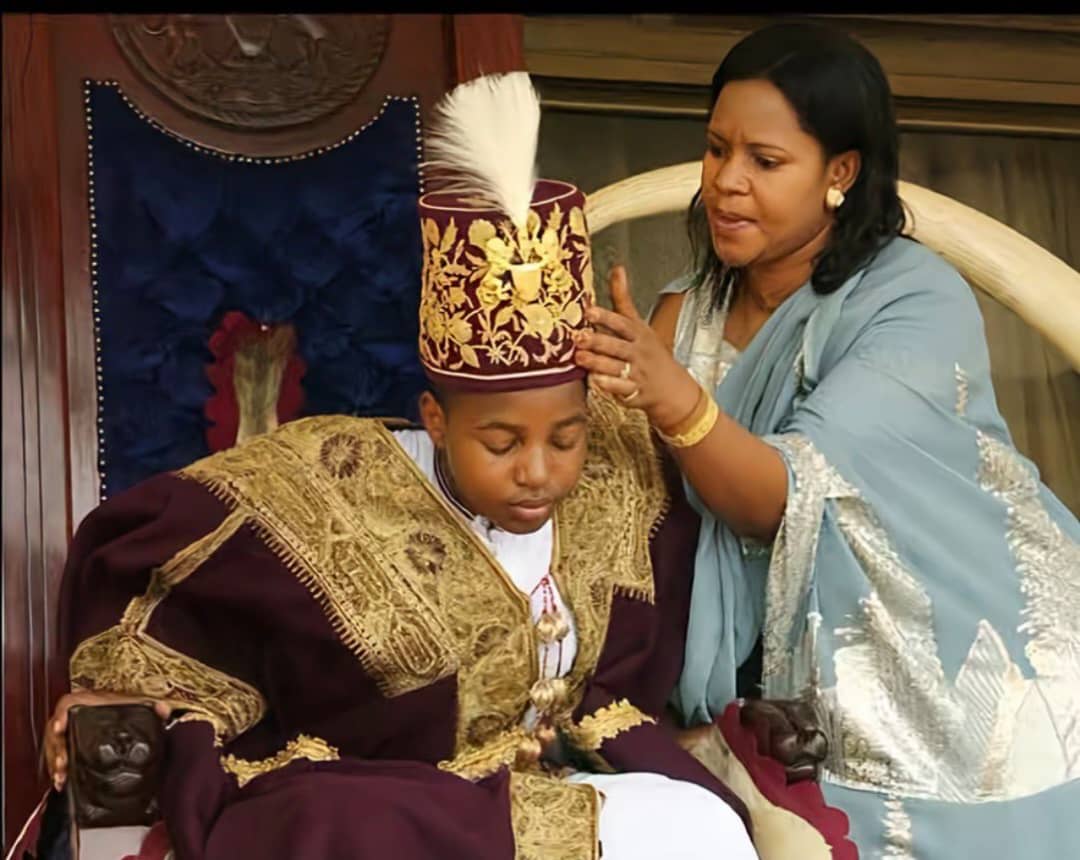
The same naming continued. When Patrick Kaboyo Olimi III prepared to leave for Cuba as ambassador, he named his unborn son Oyo Nyimba.
After the child’s birth the elders added Rukidi IV in honour of the grandfather’s line. The boy became Omukama at three years old in 1995 and reigned until his death on 27 August 2026.
Empaako, the praise names still used daily among Batooro and Banyoro, carry the same northern imprint. The word itself comes from the Luo pako, “to praise.” Amooti, Akiiki, Abwooli, Ateenyi and the rest are Luo forms that survived the language shift. Linguistic studies confirm they are not indigenous Bantu words; they entered with the Biito.
The Babiito remain the only major clan in Bunyoro that traditionally prefers endogamy, guarding the royal bloodline that mixes Bachwezi and Luo ancestry. Even Buganda’s third king, Kato Kimera, is remembered in Bunyoro tradition as Rukidi’s twin brother.
None of this is pure conquest mythology. Archaeological work at Bigo bya Mugenyi shows radical reconstruction of the site in the relevant period.
Linguistic evidence of Luo influence in western Uganda is established. The UNESCO General History of Africa and successive generations of East African historians accept a Luo elite overlay on a Bantu population around the turn of the sixteenth century.
The details of omens and sacrifices remain oral tradition, but the broader sequence of migration, language shift, and retention of northern throne names is consistent across independent sources.
So the kings of Tooro and Bunyoro are Bantu in language and culture, yet sons of Rukidi Mpuga in blood and name. The Tooro anthem still says it plainly: children of Bacwezi, grandchildren of Batembuzi, but sons of Rukidi Mpuga.
Oyo was never just a personal name. It was five hundred years of history carried on a single syllable.
Rest in peace, His Majesty Oyo Nyimba Kabamba Iguru Rukidi IV.