















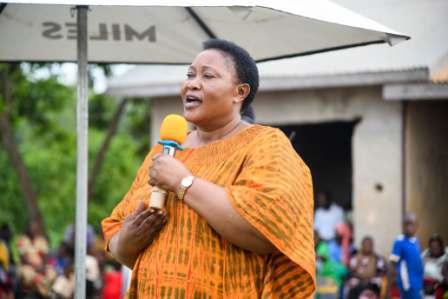
A send-off ceremony is usually a time for grief and remembrance.
In Kibundaire Village, it also became a moment to talk about the future of Busoga’s land.
The setting was Namagera Parish, Butagaya Sub-county, Jinja District.

Family, friends and neighbours had gathered to bid farewell to Nabirye Tophirista Abuze.
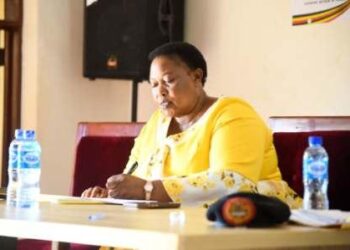
She was the beloved aunt of Hon. Babirye Milly Babalanda, the Minister for the Presidency and Member of Parliament for Budiope West Constituency.
The Minister officiated at the ceremony yesterday.
She used the occasion to speak plainly to the mourners about land.
Her message was a warning.
Dividing family land into ever smaller plots, she said, undermines commercial agriculture and household incomes.
It also weakens the national effort to end poverty.
Why Small Plots Make Big Problems
The Minister’s concern is about acreage.
When land is split again and again, each household is left with too little to run a viable farming business.
That works against Government’s wealth-creation drive.
It especially affects the Four-Acre Model championed by President Yoweri Kaguta Museveni.
The Minister did not leave the warning abstract.
“Excessive land fragmentation leaves families with plots that are too small to support productive and sustainable agricultural activities. We must manage our land responsibly to preserve its value as an asset for wealth creation,” she cautioned.
The problem is not new to Busoga.
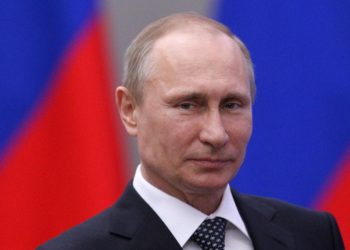
Years ago, in Mayuge District, President Museveni told Busoga’s leaders that land fragmentation is a source of poverty and a threat to food security.
He linked it to traditional inheritance practices and polygamy.
Agricultural commentators point to the same cultural norm: when the head of a household dies, the land is divided among the children.
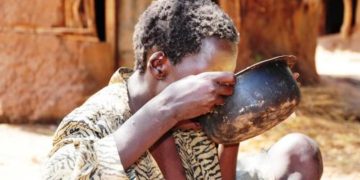
The result is that small farms keep getting smaller, which leads to overcultivation and soil depletion.
Farmers on such plots often cannot afford the fertiliser needed to sustain soil fertility.
In Butalejja District in 2024, the Lands Minister recalled the President’s advice to families to hold their land together and use it productively.
Babalanda’s message in Jinja carries the same thread.
The Four-Acre Model, Acre by Acre
The Minister explained how the Four-Acre Model is meant to work.
It promotes diversified production rather than dependence on one crop.
The first acre goes to long-term cash crops such as coffee or cocoa.
The second is for fruits such as oranges and mangoes.
The third is for food crops, including maize, beans, cassava, sweet potatoes and vegetables.
The fourth is pasture for livestock, particularly zero-grazing and dairy farming.
The model gives a family income across the seasons and food on the table.
It only works if the family still has the four acres.
Busoga’s farmers also face a wider test.
A senior official of the National Agricultural Advisory Services has said Busoga needs a perennial crop that earns money all year round, along with enterprises such as dairy farming for daily income.
The Four-Acre Model is built around that idea.
Programmes Waiting to Be Used
Hon. Babalanda urged the people of Busoga to use the government programmes within their reach.
She named the Youth Livelihood Programme, Emyooga, the Parish Development Model (PDM) and the Four-Acre Model.
The Youth Livelihood Programme targets unemployed and poor youth aged 18 to 30.
Emyooga, according to Finance Ministry data, has formed more than 7,000 Saccos and registered 2.4 million members, about 57.5 percent of them women.
The President has explained that Emyooga focuses on specific trades such as carpentry and hairdressing, while the parish model focuses on people involved in agriculture.
The PDM was launched in February 2022 in Kibuku District.
It aims to lift the 39 percent of Ugandans still in subsistence farming into the money economy.
It is designed as a revolving fund, meaning borrowers are expected to repay the principal so that money keeps circulating.
The Minister asked for the right attitude toward all of this.
“I call upon the people of Busoga to embrace Government wealth-creation initiatives with commitment, discipline and a focus on productive investment,” she said.
She stressed a positive mindset and the prudent use of available resources.
Small Enterprises Beside the House
The Minister also encouraged families to start complementary enterprises at home.
She suggested poultry keeping, vegetable growing and piggery.
These backyard ventures diversify income and strengthen food security.
They can also help a household through the months between harvests.
For families on small plots, they can make the difference.
President Museveni has also pointed to drip irrigation as a way for people with small acreage to keep farming productively.
Life, Health and Early Action
The Minister turned to health.
She urged residents to avoid self-medication and to seek timely care at recognised health facilities.
“Life is precious, and we must never take it for granted. Early detection and timely medical intervention can significantly improve treatment outcomes and save lives,” she said.
HIV/AIDS: Progress That Must Not Slip
On HIV/AIDS, Hon. Babalanda called for continued vigilance.
She asked for sustained awareness, prevention, regular testing, and access to treatment and care.
She commended President Museveni for his leadership in combating the epidemic.
She urged communities to support people living with HIV and to confront stigma and discrimination.
The national figures show why she keeps pressing the point.
Uganda has reduced HIV prevalence to 4.9 percent, down from 18 percent in the 1980s, according to the Uganda AIDS Commission.
About 1.5 million people are living with HIV, and 1.3 million of them are on treatment.
New infections fell from 94,000 in 2010 to 37,000 in 2024.
HIV testing volumes grew from 3.1 million in 2020 to 9.5 million in 2025.
The work is not finished.
UNAIDS has warned that young women aged 15 to 24 face the highest risk of new infections.
The AIDS Commission says stigma continues to discourage testing, disclosure and adherence to treatment.
A 2025 population-based survey also found that national prevalence stayed unchanged between 2021 and 2025.
The Minister’s call for compassion and regular testing speaks directly to these gaps.
Condolences from the Top
Hon. Babalanda also carried words of sympathy from the centre of Government.
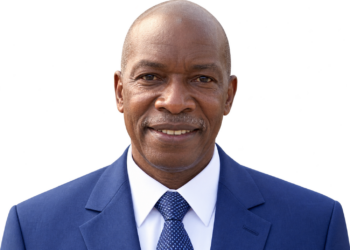
She conveyed condolences to the bereaved family on behalf of President Yoweri Kaguta Museveni.
She spoke on behalf of the First Lady and Minister of Education and Sports, Maama Janet Kataaha Museveni.
She spoke on behalf of the Permanent Secretary in the Office of the President, Hajji Yunus Kakande.
She also spoke for the entire staff of the Office of the President.
She thanked relatives, friends and well-wishers who stood with the family through prayers and other acts of kindness during their grief.
A Last Word
Her closing words were for the departed.
“May the Almighty God grant our beloved aunt eternal rest and comfort all those she has left behind,” she said.
For the mourners of Kibundaire, the day marked a loss.
For the wider people of Busoga, it carried a challenge to keep the family land whole and make it productive.