














The hills of Kyankwanzi have long hosted Uganda’s political education.
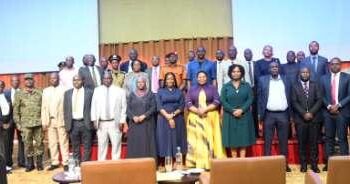
It was here, at the National Leadership Institute, that a familiar cast of local leaders gathered this week for what was billed as a technical retreat.
On paper, the agenda was administrative: aligning district action with the country’s new Manifesto and the Fourth National Development Plan.

In practice, the room walked away with something closer to a political roadmap for the next five years and beyond.
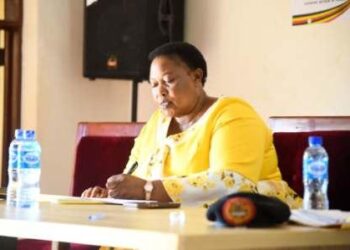
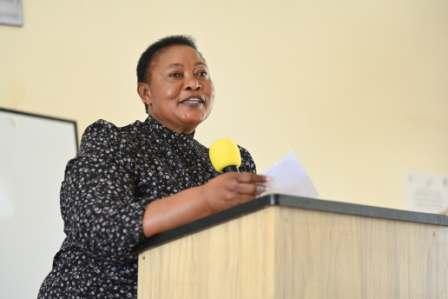
The Minister for the Presidency and MP for Budiope West, Hon. Babirye Milly Babalanda, delivered the message.
Addressing District Political and Technical Leaders from the Ankole, Kasese, Bunyoro, Tooro and Kigezi sub-regions, she made clear that President Yoweri Kaguta Museveni’s work is far from finished.
The Headline Declaration
Minister Babalanda did not bury her lead.
She told the gathering plainly that President Museveni is committed to serving Ugandans beyond 2031.
She framed what remains as the most consequential phase of a decades-long journey.
“The NRM Government has moved Uganda from scarcity to surplus,” she said.
She pointed to the country’s food production, its network of tarmac roads, expanded electricity coverage and guaranteed security as evidence of that shift.
But she was equally clear that the job is unfinished.
“The President’s ultimate target is clear: moving all 39% of Ugandans still in subsistence into the money economy using wealth creation Programs like PDM, Emyooga, Operation Wealth Creation, Emyooga etc as direct weapons against poverty,” she said.
“The President also has to finish the war on corruption,” she added.
“Therefore, he is here 2031 and beyond to finish the unfinished business,” she said.
What the Numbers Say About “Unfinished Business”
Minister Babalanda’s framing did not emerge in a vacuum.
It echoes language used by President Museveni himself when he launched the NRM’s 2026–2031 Manifesto in September 2025, under the theme “Protecting the Gains and Securing a Qualitative Leap into High Middle-Income Status.”
Government figures presented at that launch showed poverty had fallen from 21.4 percent in 2016 to 16.1 percent in 2025.
The same figures showed households still engaged in subsistence farming had dropped from 68.9 percent to roughly 33 percent over the same period.
That 33 to 39 percent band, depending on the measure used, is precisely the population Minister Babalanda referenced in her address at Kyankwanzi.
The NRM’s own manifesto documents describe commercialising that remaining subsistence population as central to fully monetising Uganda’s economy over the next five years.
Museveni secured a seventh elective term in the January 2026 general election, winning with just over 71 percent of the vote, a mandate his government has cited as the basis for carrying the Manifesto’s implementation forward.
The Fourth National Development Plan, running from 2025 to 2030, was designed to pick up where the previous development plan and manifesto left off, giving technical shape to the political commitments Minister Babalanda was relaying to district leaders.
A Manifesto Is a Promise, Not Paperwork
Having addressed the political horizon, Minister Babalanda turned to the substance of the retreat itself.
She thanked President Museveni for the leadership that has allowed the NRM Government to sustain implementation of its programmes.
She then offered a definition of what a manifesto is actually meant to be.
“A manifesto is not merely a political document,” she said.
“It is a commitment to the people,” she said.
“Its success will ultimately be measured by whether the lives of Ugandans improve,” she stated.
She explained that the retreat had been convened specifically to shift official attention away from activities and expenditure and toward measurable results.
She said that shift was necessary as the country begins implementing the 2026–2031 Manifesto in earnest.
Where the Manifesto Meets the Village
Minister Babalanda was explicit that the real test of the Manifesto would not be visible in Kampala boardrooms.
She said it would be seen at the district, city, municipal, community and household levels.
She listed better schools and health facilities among the visible markers of success.
She listed increased agricultural productivity as another.
She listed improved roads, water and sanitation as further benchmarks.
She listed expanded opportunities for youth and women, and more efficient public services, as the remaining tests.
She told the assembled leaders that districts are the critical link between government policy and actual service delivery.
She directed that every district development plan, budget, work plan and performance target must be aligned to the priorities of both NDP IV and the Manifesto.
She laid out the implementation chain leaders were expected to follow: Manifesto, then Plans, then Budgets, then Implementation, then Monitoring, then Results.
“The key question should be, ‘What has changed in the lives of our people?'” she said.
“That is the standard by which we must measure our performance,” she said.
A Call for Unity Among Political and Technical Leaders
Minister Babalanda used part of her address to speak directly to the working relationships inside district governments.
She called for strong cooperation between political and technical leaders.
She urged Resident District Commissioners, District Chairpersons, Mayors, NRM leaders, Chief Administrative Officers and Town Clerks to work as one team.
She asked that they operate with mutual respect and shared accountability.
“Let us avoid unnecessary rivalry and conflict,” she warned.
“Leadership must be judged by results, not by position,” she said.
Guarding Public Money and Catching Problems Early
Turning to accountability, Minister Babalanda was unambiguous about the standard she expects.
“Every shilling of public money is a public trust,” she said.
She directed districts to strengthen financial management, procurement, project supervision and internal controls.
She said this should be done in a way that lets citizens see what has been committed, what has been delivered, and what remains outstanding.
She introduced a guiding principle for how leaders should monitor their own programmes.
“Monitor early, identify problems early and act early,” she said.
She stressed that monitoring must function as a management tool, not merely as a reporting exercise carried out after the fact.
Turning Comparative Advantage Into Household Income
Wealth creation sat at the centre of Minister Babalanda’s address, and she pushed districts to think concretely about their own economic strengths.
She tasked every district to identify its comparative advantage.
“Every district should ask: What can we produce?” she said.
“What can we add value to?” she said.
“Which markets can we access?” she said.
“What enterprises can create jobs?” she said.
“How can we increase household incomes?” she said.
She pointed to opportunities in agricultural commercialisation, value addition, industrialisation, tourism, trade, innovation and the digital economy.
She demanded improvements in education learning outcomes and student retention.
She demanded that health facilities be fully functional, with adequate health workers and medicines.
She called for continued support to vulnerable groups.
She added that youth and women empowerment must be measured by the enterprises created and incomes increased, rather than simply the number of people who pass through a programme.
She also urged leaders to protect wetlands, forests and water sources.
She encouraged districts to embrace digital transformation as a way to improve revenue collection, transparency and service delivery.
Leaving Kyankwanzi With a Plan, Not Just Notes
Minister Babalanda closed her address by setting expectations for what leaders should carry home from the retreat.
She challenged them to leave with a practical action agenda rather than just a written report.
“By the end of this retreat, every participant should return to their district with clarity, commitment and a practical action agenda,” she said, spelling out that it should include priority commitments, required actions, resources, responsible officers, expected results and measurable indicators.
She then delivered her closing charge to the room.
“The 2026-2031 Manifesto is not merely a document to be implemented; it is a national commitment to be delivered,” she said.
“Our task is not simply to promise — our task is to deliver,” she said.
“Let us move from commitments to action, to results, to lasting transformation,” she said.
She urged the leaders to govern with integrity, patriotism, discipline and accountability.
She reminded them that public office is a trust, and that Ugandans expect tangible improvements in their quality of life in return for it.
As the retreat wound down, the leaders from Ankole, Kasese, Bunyoro, Tooro and Kigezi dispersed back to their districts carrying more than a technical briefing.
They carried a clear signal from the centre of government that Uganda’s current political leadership intends to remain at the helm well past 2031, with the unfinished work of poverty eradication and anti-corruption enforcement cited as the justification.